
About CoRE and CoRE on Interdisciplinary Peace
EXPERTISE
Webpage under construction
About CoRE
Established in 2023, the Africa- Europe Clusters of Research Excellence (CoRE) is the product of a partnership between the African Research Universities Alliance (ARUA) and The Guild of European Research-Intensive Universities (The Guild). It aims to produce ‘a new form of collaboration between some of the best researchers from both continents, striving for equitable partnerships in an unequal world’. Over a planned ten-year period, the collaborations will drive research, innovation, teaching, and skills development. All with the goal of responding to the common socio-economic and scientific issues affecting Africa and Europe. There are 22 clusters (known as CoREs) organised around four priority areas: Public Health, Green Transition, Innovation & Technology and Capacities for Science. These themes emanate from The African Union (AU)- European Union (EU) Innovation Agenda that aims to ‘[s]trengthening Research and Innovation (R&I) cooperation between the African Union (AU) and the European Union (EU)… as R&I contributes to sustainable and inclusive development, economic growth and job generation, thereby reducing poverty and inequalities’.
All CoREs share the same foundational principles. They contributed to achieving the UN’s Sustainable Development Goals (SDGs) through the production of transformative, science-driven solutions to respond pressing societal challenges. These solutions are anchored in research excellence and a bottom-up model where scholars set priorities with strong, long-term institutional backing. They champion fairness and inclusivity through equitable recognition, resource allocation, and broad collaboration including those organisations that do not form part of ARUA and The Guild networks. Finally, by encouraging knowledge exchange and strengthening postgraduate training systems these CoREs build enduring research capacity and foster sustainable, cross-continental partnership. More information is available here.
The Building Capacities for Interdisciplinary Peace Research: Exploring Conflict, Environment, Technology, Inequality, and Identity in Africa (CoRE on Interdisciplinary Peace) cluster falls under the Capacities for Science priority area. It encapsulates the following interdisciplinary research themes: Health and Peace; Peace, Cities, Environment, Infrastructure and Architecture; Migration and Peace; Land, Natural Resources, Climate and Environment as Peace; Technologies and Peace and Demographic Shifts and Peace. Itis jointly led by Addis Ababa University (AAU) and its Institute for Peace and Security Studies (IPSS) and King’s College London (KCL) with the African Leadership Centre (ALC) being the focal point at KCL. The ALC is also one of the two KCL co-leads of the Creative Economies- Cultures, Innovation and Sustainability (CoRE on Creative Economies in Africa) cluster which is part of the Innovation and Technology priority research area. We also have an ongoing connected project exploring peace ontologies.
About CoRE on Interdisciplinary Peace
An agenda for comprehending interdisciplinary peace is anchored on the logic that understanding and explaining peace must engage with the dynamic nature of reality, which necessarily requires a whole-of-society approach. The main rationale for such an integrated approach is to centre societal experience in impact-inspired knowledge creation that should underpin meaningful policy, practice and societal interventions. This approach will be reinforced by our introduction of an interdisciplinary working group approach that is iterative and cross-cutting across academic, practice, policy and societal constituencies to create a collective epistemic community as well as a community of practice.
The most enduring logic of peace is in Johann Galtung’s bifurcated notion of peace as either negative, in the absence of physical violence, or positive, in the absence of structural violence and social injustice.1 Another valuable contribution from this body of work is that violence is not purely about conflict, but the distance between the actual and the potential; how those are understood will be dependent on contextual realities. Tim Murithi notes that centring notions of peace with African roots, with reference to Ubuntu and the pivotal South African post-apartheid peace process, requires a shift beyond the absence of violence to the significance of reciprocity, shared destiny and inclusivity. Here, solidarity, coexistence, mutuality and reparations emerge as critical points and individual humanity is refracted through a collective lens.2 Yet tensions abound. What synergies and distinctions emerge from these framings?
While extant understandings of peace constitute our starting point, the work of the CoRE is to build on this to co-create critical conceptual developments through interdisciplinarity and collaboration across knowledge and practice communities. We do so through attention to critical realities that shape transformation and progress across Africa and in its relationship with the world.
In contemporary contexts there are emerging concerns that reflect the complex dynamics of the African continent. Health is an obvious and longstanding concern in conflict affected contexts (it is also notable that Galtung’s own work was informed by health); the COVID19 pandemic has placed this theme in the fore. Cities and architecture are critical concerns in conflict and reconstruction through infrastructure; what happens when we pivot from longstanding concerns about infrastructural damage to restoration and peace? Connected to the urban (and rural) are questions of land ownership, use and access and how violence but also reductions and ends to violence cause new disruptions and how this shapes peace and can in turn be shaped by peace. Movement of peoples particularly African peoples is treated and understood as a threat, disruption and destruction. A description of these themes are available in the Interdisciplinary Research Themes section of this webpage.
Leads and Partners

Professor Ekaette Ikpe
Director, African Leadership Centre King’s College London
Professor in Development Economics in Africa. Eka currently co-leads two Africa-Europe (African Research Universities Alliance-The Guild) Clusters of Research Excellence (CoRE) – CoRE on Creative Economies in Africa and CoREUK Ministry of Defence, UK All Party Parliamentary Group on Africa, UK Parliament Foreign Affairs Committee, UK FCDO and global NGOs, among others.
Prof Eka is a Co-editor of the Book Series, Peace, Society and the State in Africa (Bloomsbury), African Perspectives on Peacebuilding and Leadership (Bloomsbury) and Creative Economies in Africa (Routledge). She serves as a Trustee for the global thinktank, ODI. Eka has commented on development, peace and security for BBC World News, BBC Radio 4, Al Jazeera and Radio France International.
Dr Mercy Fekadu
Addis Ababa University (AAU) - Institute for Peace and Security Studies (IPSS)
Mercy Fekadu Mulugeta (Ph.D.) is an Associate Professor and Interim Director, Institute for Peace and Security Studies, AAU, and Secretariat Member of the Tana High-Level Forum on Security in Africa (Nov 2011–On-Going). Her research interests include; Borderland Governance, Boundary and Territorial conflict, Security Governance, Statehood, Conflict, Small Arms and Light Weapons, Disarmament, Regionalisms, Women, Peace, and Security.
Ghent University
Makerere University
Obafemi Awolowo University
Radboud Universiteit
University of Dar Es Salaam
University of Ghana
University of Lagos
University of Oslo
University of Pretoria
University of Warwick
Ghent University Makerere University Obafemi Awolowo University Radboud Universiteit University of Dar Es Salaam University of Ghana University of Lagos University of Oslo University of Pretoria University of Warwick
Interdisciplinary Research Themes
-

Health and Peace
This theme explores how health and peace reinforce one another, especially in places affected by conflicts. In such contexts, communities often endure trauma, deteriorating health outcomes, and restricted access to care due to insecurity and fragile health systems. Conversely, resilient, inclusive health systems can foster trust, strengthen social cohesion and lay the foundation for sustainable peace.
This interdisciplinary theme analyses how physical and mental health influence peacebuilding processes by drawing on local perspectives on healing, wellbeing, and community resilience. Furthermore, it assesses how digital technologies and environmental conditions shape mental health, recovery, and peace efforts. Central questions include which policy actors are most influential, whose perspectives remain excluded, and how gender, age, and migration dynamics intersect with health and security. Our research further examines the roles of arts, culture, and local knowledge systems in supporting peace and wellbeing. In doing so, we highlight indigenous forms of knowledge that reveal how health and peace are linked in ways that are grounded in local realities and that can be sustained over time.
-

Peace, Cities, Environment, Infrastructure and Architecture
It examines how violent conflicts reshape cities, destroys infrastructure, and disrupts the built environment. Damage to roads, housing, water systems, and public spaces leaves long-lasting scars on communities, often deepening divisions and driving displacement. Climate change further increases risks by placing additional stress on fragile urban systems. Yet across Africa, inspiring examples of innovative architecture and infrastructure respond creatively to local contexts, resource constraints, and environmental conditions are offering valuable lessons for building more peaceful, inclusive, and connected communities.
This theme explores how architecture, urban space, and infrastructure shape prospects for peace, and how peacebuilding efforts can reimagine cities through reconstruction, reconciliation, and designs that reconnect people and places. It also addresses questions around gendered experiences of violence, the impacts of technology and environmental change, migration dynamics, and the policy actors who influence urban transformation. By foregrounding indigenous knowledge and local perspectives on cities, the theme generates fresh insights into how built environments can actively support sustainable and lasting peace.
-
Migration and Peace
This theme explores the impact of conflict and peace on migration in Africa and how these migratory dynamics influence ideas of safety, belonging, and stability. While emphasis has been placed on young Africans leaving the continent, most migration takes place within Africa itself. Conflict can force displacement, yet peace and opportunity also drive mobility (of a voluntary type), creating overlapping patterns of internal displacement, return migration, circular migration, and labour mobility with varied social, economic, and political ramifications.
Migration and Peace investigated how people on the move understand and experience peace, whether they are fleeing violence or migrating in times of stability. It critically examines persistent myths portraying Africa as defined by instability, and analyses how diaspora communities contribute to peacebuilding in their countries of origin. Key questions address gendered experiences of violence, the emotional and social dimensions of displacement, and which policy actors and perspectives are overlooked in current debates. By foregrounding indigenous knowledge and lived experience, the theme offers deeper insight into migration’s vital role in shaping and sustaining peace.
-
Land, Natural Resources, Climate and Environment as Peace
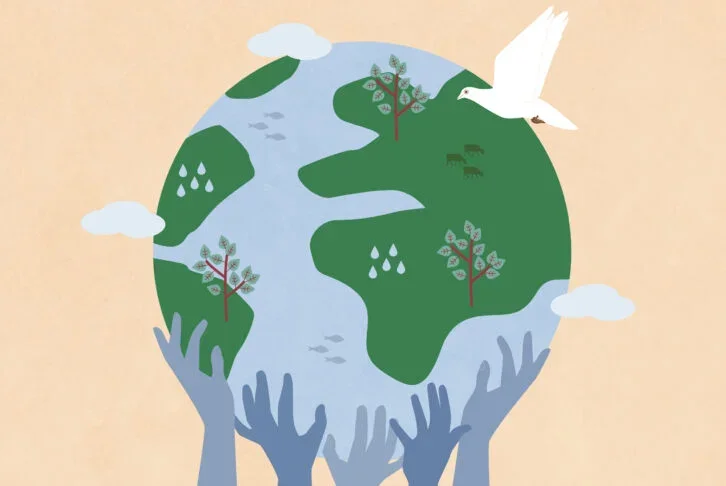
This theme examines the links between access to, ownership of, and control over land and conflict and peace dynamics across Africa. Land lies at the heart of livelihoods, identity, and political power, and has long been entangled with dispossession, structural inequality, and contestation. These issues have been made worse by climate change, environmental pressures and competition over natural resources which can ignite or prolong violence. However, at the same time, fair and accountable land governance holds significant potential to advance equity, restorative justice, and long-term stability.
In sum, this interdisciplinary theme investigates how communities most directly affected by land and resource tensions define and experience peace and how their perspectives can inform more effective interventions. It analyses how climate change mitigation and adaptation strategies reshape land use, how colonial and post-colonial legacies continue to structure land governance systems, and how identity, gender, and transitional justice influence experiences across rural, urban, peri-urban, and borderland contexts. It also looks into civic participation in land decisions, the consequences of development-driven displacement, and the role of indigenous knowledge in rethinking relationships between land, environment, and sustainable peace.
-

Technologies and Peace
Description This theme explores how emerging technologies and climate-driven energy transitions are reshaping daily life and influencing experiences of peace. Digital tools can expand access to information, strengthen cross-border connections, and create spaces for civic engagement, particularly for young people seeking to imagine and build more peaceful futures. At the same time, unequal access to technology, concentrated control over data, and gaps in digital infrastructure risk deepening existing inequalities. In some contexts, technologies are deployed to spread misinformation, enable surveillance, or reinforce military power, posing serious challenges to peace and security.
In brief, this research area examines how technological change can both enable and undermine peace. As societies invest in renewable energy, digital infrastructure, and climate-responsive innovations, new opportunities emerge for inclusion, economic participation, and regional cooperation. Yet these same dynamics can also generate tensions over critical minerals, land use, energy access, and technological control, potentially reinforcing inequalities or triggering new forms of conflict. The Technologies and Peace theme also examines whose voices are heard in digital spaces, how young people influence peace debates, and how things like mineral extraction, energy transitions and everyday technologies shape communities. It also explores how local and indigenous knowledge can guide more inclusive and peaceful technological futures.goes here
-

Demographic Shifts and Peace
Africa is home to one of the world’s youngest and most diverse populations. This demographic reality carries profound potential. With meaningful support and opportunity, young people can drive innovation, shape political life, and play a transformative role in building and sustaining peace. Yet, in any peace and security debates, youth are framed primarily as a source of risk or instability. This theme challenges that dominant view by foregrounding the creativity, leadership, and aspirations of younger generations, while recognising that demographic change also involves shifts in ethnicity, culture, gender, and identity. All these factors shape how peace is understood, negotiated, and lived.
This theme explores how different generations experience conflict, peace, and social change, including how demographic changes impact on attitudes toward migration, the environment, new technologies and community life more generally. It also unpacks the tensions and solidarities between age groups and in the process examines how intergenerational dynamics shape political participation, social cohesion, and future trajectories. By identifying inclusive strategies and elevating local knowledge, the theme seeks to ensure that demographic change becomes a driver of fairness, resilience, and lasting peace.
Methodology
Integrity, The preliminary impression of our research pathway is to start from the local whilst thinking global. We start off with the view to developing robust and collective research agenda that is relevant to knowledge creation, societal experience and policy around questions of peace. To achieve this, the research agenda would be co-created such that researchers alongside all stakeholders, i.e. a community of practice – policy makers, actors of peace and conflict, members of society, who are impacted by the absence of peace as defined by them, together with those responding to it and those making the decisions – to be part of the process and collectively lay claim to the resultant knowledge products, as part of a collective epistemic community.
This draws from the working group methodology which centres co-creation between academics, policy actors and practitioners. The CoRE extends this framework to centre interdisciplinarity for understanding and addressing global challenges. Multi-disciplinary and interdisciplinary teams are convened around thematic questions to evolve transdisciplinary solutions for collectively addressing the CoRE’s pressing questions.
As a starting point, we would convene policy and practice communities – a community of practice – around the noted themes for interrogation and reflection for relevance. For each theme, concepts, questions and methodologies would be proposed and refined through research and intra and intra group consultations. A feedback loop would be integrated into our approach for refining and validation purposes. The ultimate motivator of our methodology is the integration of the reality check approach where we ensure our CoRE is addressing real world challenges through co-created ideas and collaborative knowledge generation.